
A public knowledge hub for the global platform: reports, framework pages, curatorial notes, applied research and institutional documents.
Knowledge Hub
Reports, curatorial documents and public knowledge.
Exodus & Resilience publishes institutional documents, methodological frameworks, curatorial notes, applied research and public resources as the platform advances through its founding phase and first operating cycles.
Understand reports in ten seconds
What it is
What it documents
Which chapters
Why it matters
What is published now
How to use it
Methodology, governance, ethical standards, impact indicators, learning, territorial evidence and the limits of what can be claimed.
New York/Venezuela · Caracas · Acarigua, each producing local evidence while contributing to a shared framework.
In cultural work, documentation is not administrative residue. It is how memory, accountability and institutional learning become public.
Framework pages and founding-phase documents. Definitive, dated and signed reports will be published as verified operations advance.
For funders, institutions, researchers, curators, educators and communities seeking context, evidence and responsible interpretation.
Knowledge is also infrastructure
The Exodus & Resilience Knowledge Hub is not a decorative repository. It is the place where the platform documents decisions, methodologies, limits, learnings, reports, curatorial notes and public evidence.
In cultural projects connected to migration, memory and communities, documentation is not only the recording of activity. It means deciding what is preserved, how it is contextualized, under what consent it is published and which learnings can be transferred to other territories without erasing their local specificity.
Verifiable memory
Documents should allow decisions, alliances, methodology, sources, results and interpretive limits to be reconstructed.
Situated knowledge
Each chapter produces evidence from its own territory. The platform consolidates learning without turning different contexts into interchangeable data.
Responsible accountability
Reporting means communicating progress while also declaring limits, pending items, learnings and aspects that cannot yet be verified.
Before reporting outcomes, we build verifiable capacity
Exodus & Resilience is currently in its founding phase. Before reporting program outcomes, we have prioritized building the institutional architecture required to make impact verifiable, traceable and sustainable.
New York/Venezuela, Caracas and Acarigua are articulated as complementary territorial frameworks.
Venezuelan American Endowment for the Arts (VAEA) for the New York/Venezuela program, and Fundación Museo de Arte Acarigua-Araure for the Acarigua program.
Caracas is documented as a program in development, with support channels and institutional mechanisms to be communicated when confirmed.
The global website presents the shared curatorial framework, methodology, governance and public knowledge architecture.
Six-stage methodology: listen to the territory, build the curatorial framework, mediate, activate, document and report.
SDGs 3, 4, 5, 8, 10, 11, 16 and 17 are used as a reference framework, not as verified outcome claims.
This page is updated as new alliances are formalized and chapters enter implementation. Each new claim is published with its documentary source. Program indicators —participants, workshops, training hours, documented works and educational outcomes— will be published only when verifiable data and methodology are available.
Publications
Institutional documents
Each listed document currently has a framework-page version describing its institutional structure. Definitive, dated, versioned and signed versions will be published from the platform’s first operating cycle, according to the phased governance model.
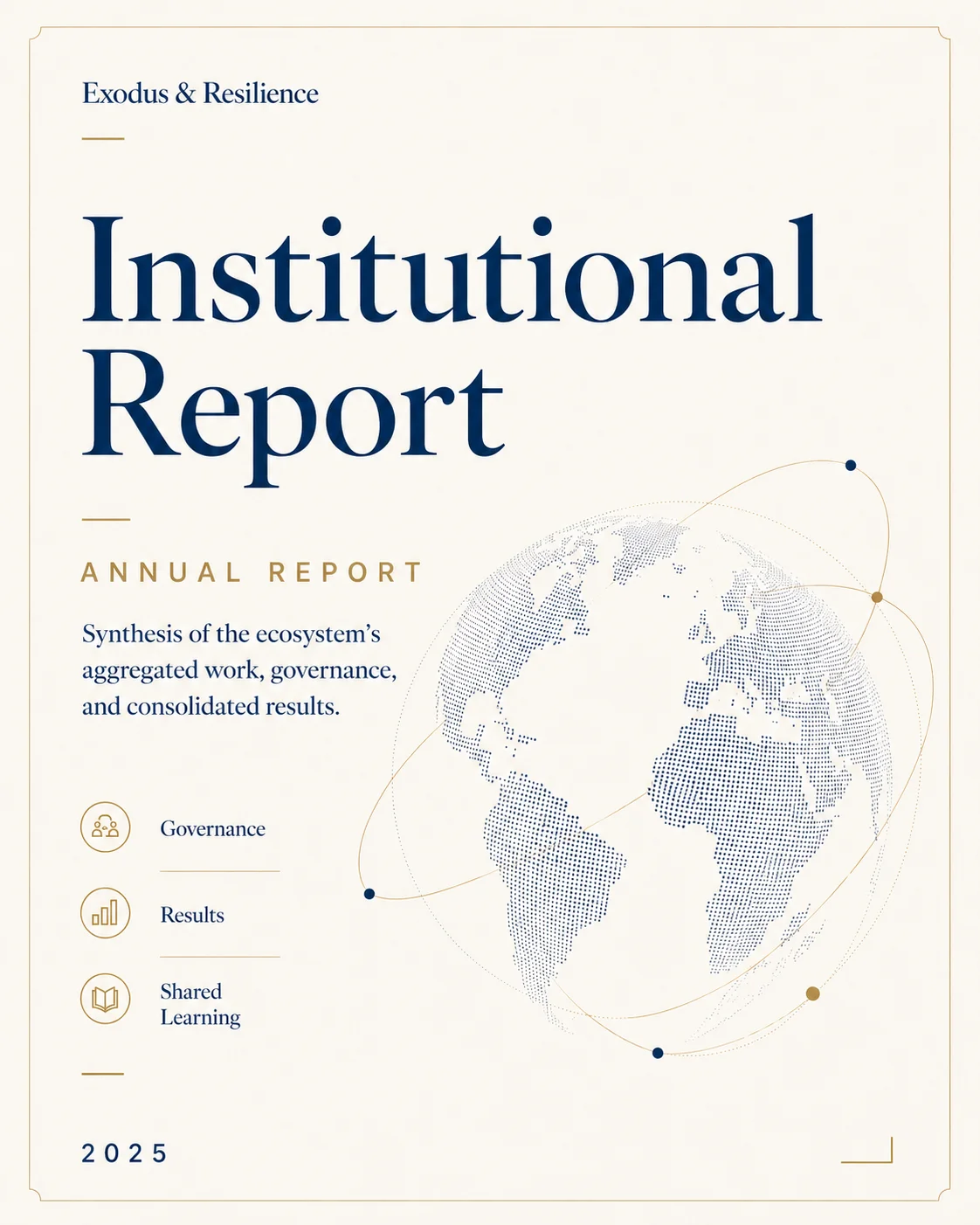
Institutional framework · v1.0
Institutional report
Foundational synthesis of the ecosystem, its architecture, curatorial framework and initial governance.
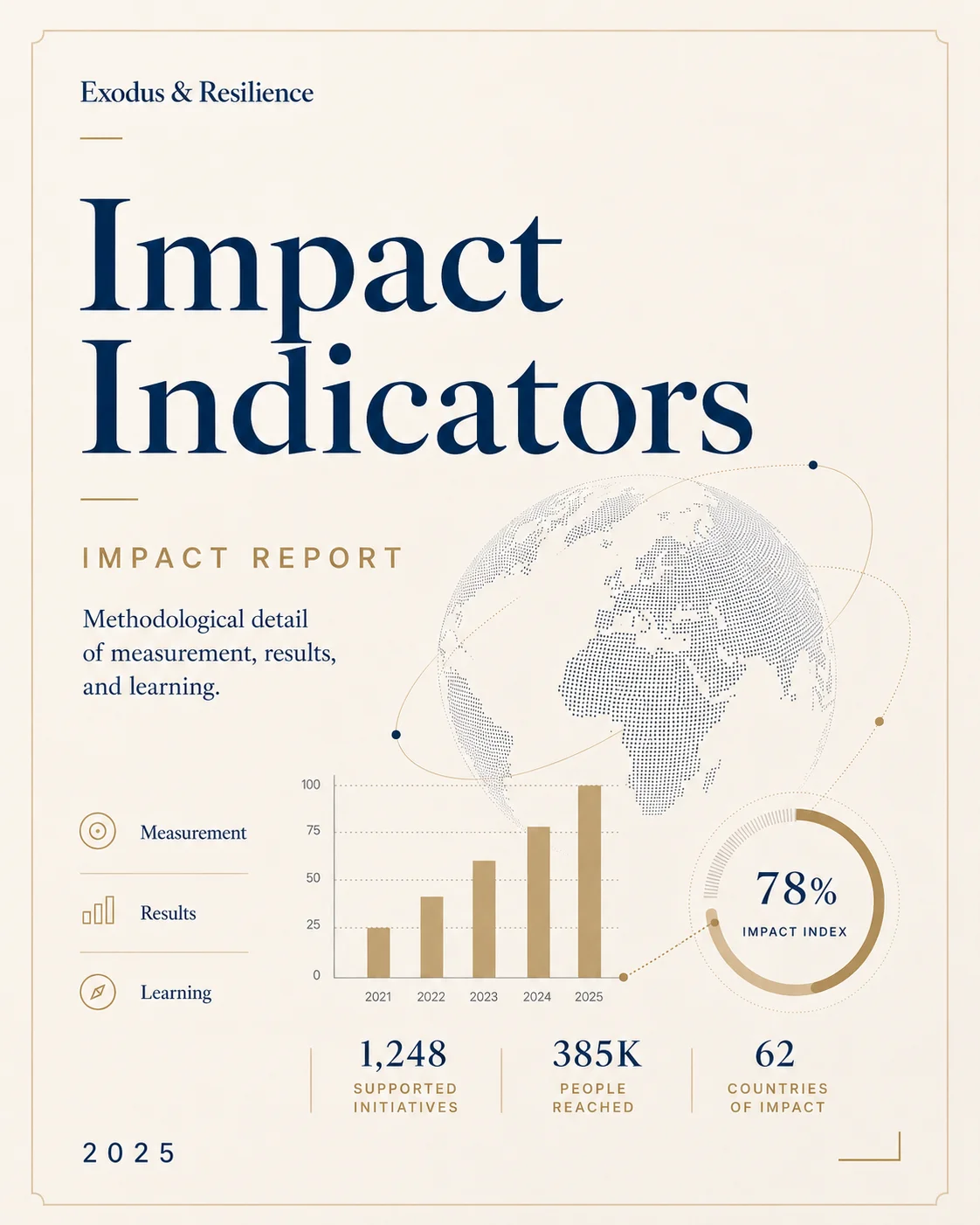
Impact framework · v1.0
Impact indicators
Methodological detail of measurement, limitations, learnings and evidence by chapter once program activity exists.
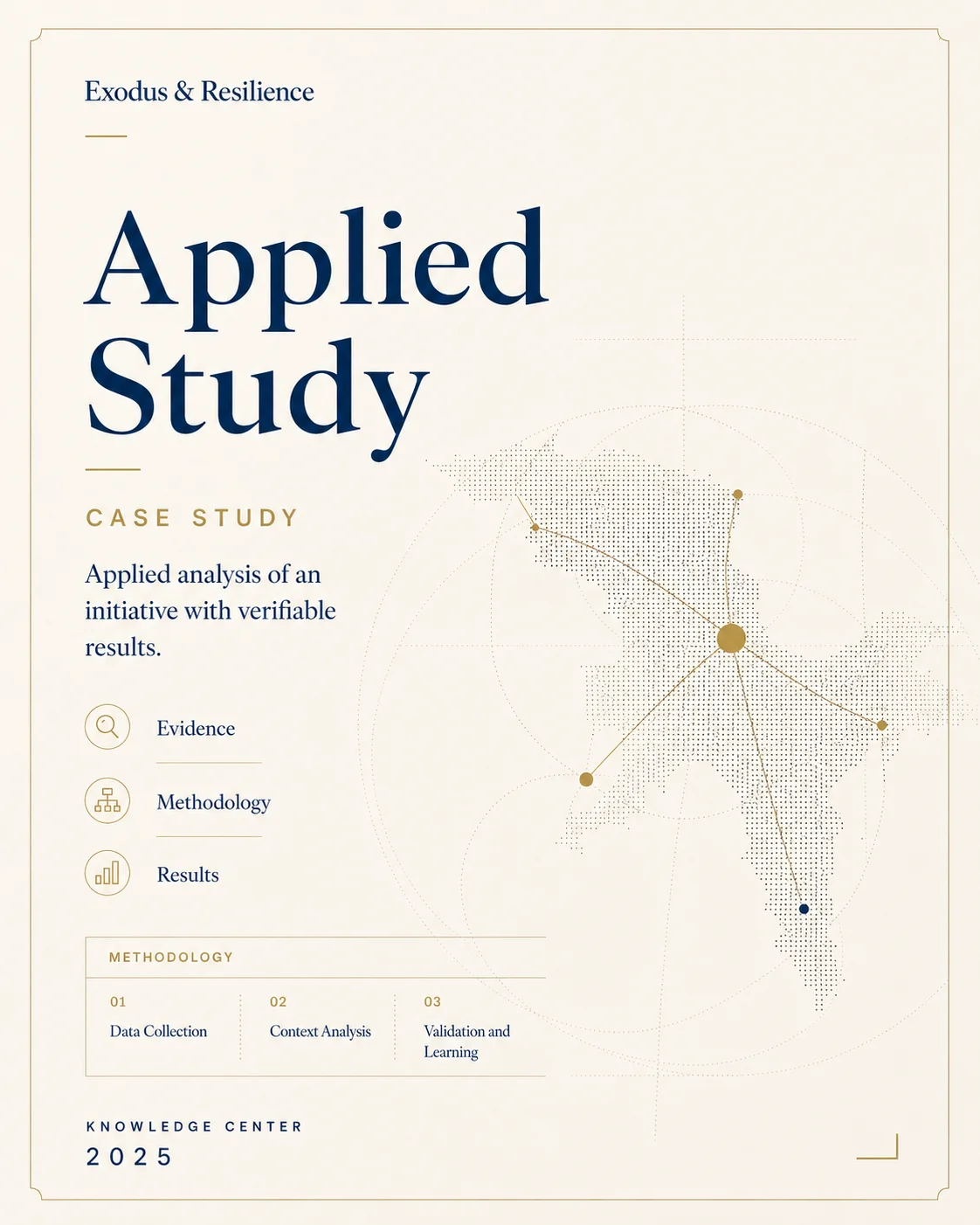
Applied study · v1.0
Applied study
Framework for future case studies with methodology, context and verifiable results once program activity exists.
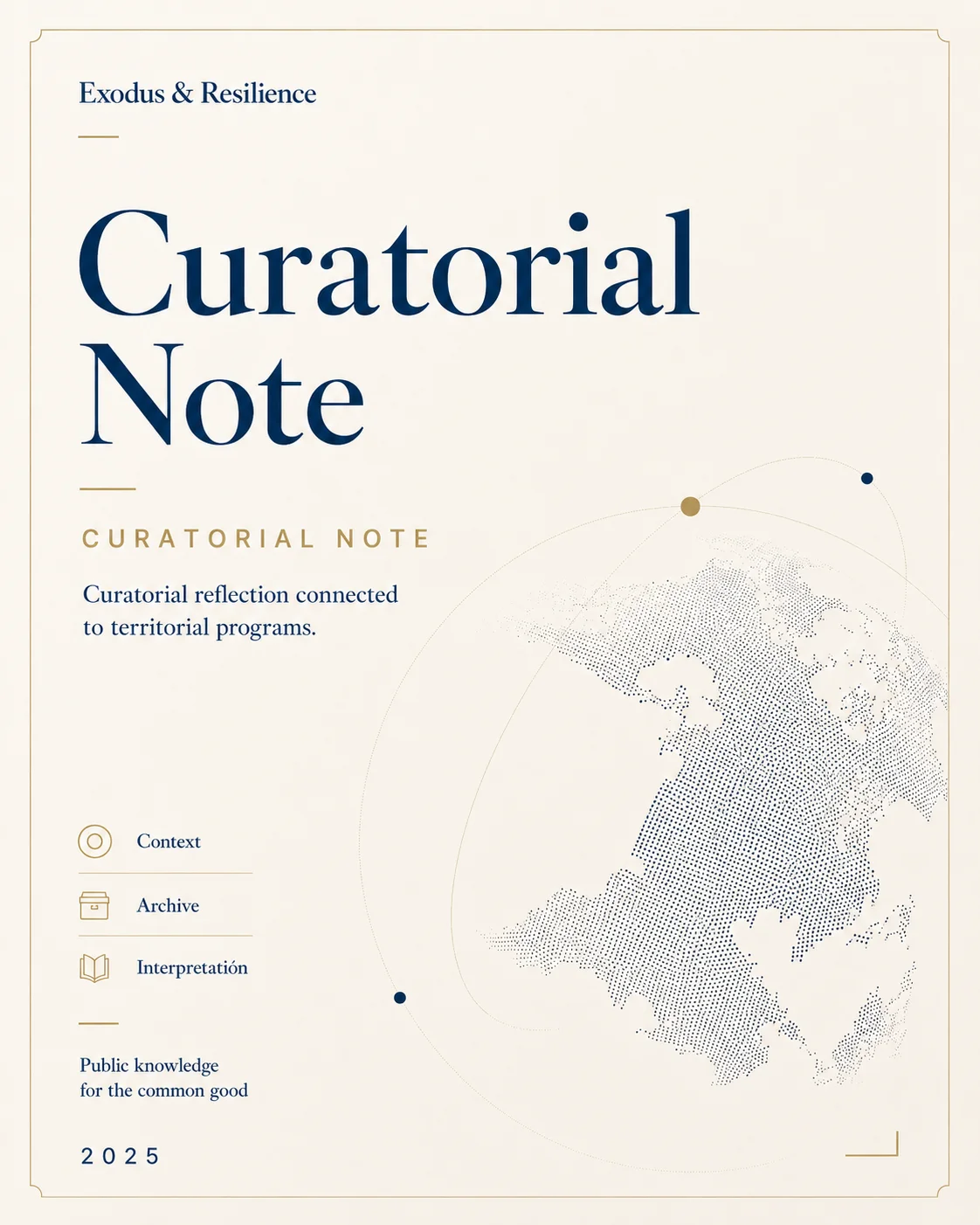
Curatorial framework · v1.0
Curatorial note
Curatorial reflection linked to memory, migration, contemporary art and territory.
Applied research · v1.0
Applied research
Knowledge production framework with universities, research centers and technical partners.
Press framework · v1.0
Press materials
Framework page for institutional summary, messaging, authorized images and public communication resources.
Definitive versions will be available as downloadable PDFs only when formally approved. Until then, these framework pages are public reference tools, not final audited reports.
Academic collaborations
We maintain an applied research line with universities and research centers, oriented toward producing useful knowledge on culture, migration, wellbeing, memory, cultural rights and community resilience.
Academic collaborations may take the form of case studies, impact evaluation, publications, data analysis, mediation methodologies or territorial documentation. Program-specific outputs will be published only when sufficient evidence exists and each chapter has entered implementation.
Propose an academic collaborationEach program should leave verifiable memory
Each chapter should generate useful documentation for partners, communities, researchers and institutional teams. Public memory is not limited to recording activities: it enables process evaluation, decision correction and preservation of evidence about what has been learned.
- Reports. Periodic documents on results, governance and traceability once program activity exists.
- Case studies. Deep readings of specific initiatives and their learnings, published when evidence is available.
- Curatorial notes. Reflections on memory, migration, contemporary art and territory.
- Applied research. Knowledge production with academic and technical partners.
- Press materials. Institutional communication resources and public context for media.
How documents should be used
Published documents are intended for institutional, academic, philanthropic and transparency purposes. Their use must respect authorship, context, image rights and the dignity of represented communities.
When a document includes images, testimonies or sensitive data, it will only be published in the form authorized by the corresponding consent and safeguarding policy.
No document should be used to imply operational results, confirmed funding or program impact that has not yet been formally published with source, context and verification methodology.
See ethics frameworkMaster platform and active chapters
This is the institutional headquarters of Exodus & Resilience. For local programming, chapter-specific documentation and public updates, visit the active territorial sites.
- New York/Venezuela. newyork.exodusandresilience.org
- Caracas. caracas.exodusandresilience.org
- Acarigua. acarigua.exodusandresilience.org
Follow institutional updates as the first operating cycle advances.
Reports, signed documents and verifiable indicators will be published as each milestone is reached and each chapter enters implementation.